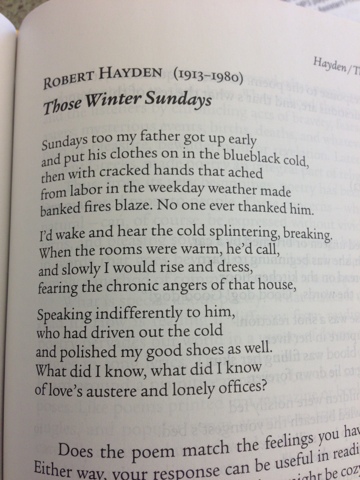
What was is fathers job?
Word like splintering and breaking present aching tone. Why does the author have this tone?
What was there to fear in the house? "Chronic anger"?
Does this connect with teenagers today despite differences in the time period? Is there symbolism to driving out the cold in the house and in the lives of the family?
Personal response to text:
At the beginning of the text the author sounds like he or she is very distant from the family and especially in this case the father. The father had worked all week and gets up early on Sundays too! I know in my family we get up "early" on Sundays after a long week but it is to attend church. The author does not seem at all appreciative for the fathers labor of love for the family. I feel like this is what he or she is really trying to convey on the poem. He or she is reflecting on younger days when these things didn't mean as much. Now looking back they feel guilt and wish they would have given thanks. I feel like this is very relate able for teens today because so many of us take for granted the abundance we have today.
Overall thoughts about the text:
I felt like the text presented its information in a very relate able way. Many teens don't realize that they have so many blessings until later in life looking back. It not only appeals to people who are removed enough from the childhood to see this but it is a warning to appreciate what you have. The unique tone used also gave a clear insight to the authors feelings and respect that he or she hadfor the father for completing all of these tasks despite the cracked hands and could Sunday morning.
Class notes:
When there is a period or a break in a line then is called caesura. This means a startling or a break in the speakers message. Enjambmet is when a line in the poem contines through lines without period or commas. Connsanance happening throughout with the k sound to sound like a fire, repetition of a consonant sound in the middle of en of the word. Also a lot of assonance with the w sound at the beging of the word. Setting is in old time polish shoes am have fire to hear house. Happening on a Sunday morning. Morning symbolic of new beginning. Personification with the house having cronic anger and the house is splintering and breaking.
Final thoughts: This poem showed a speaker that was full of remorse for never thanking his father for his unconditional love. The author has trouble really feeling okay with his past because he is so troubled. He never thanked his father and now it is too late.

No comments:
Post a Comment